Obarrio & San Francisco
The dense, walkable middle of Panama City — where the restaurants are, where the cafés actually fill up, and where an apartment life feels more like living in a real city than like living in a tower.
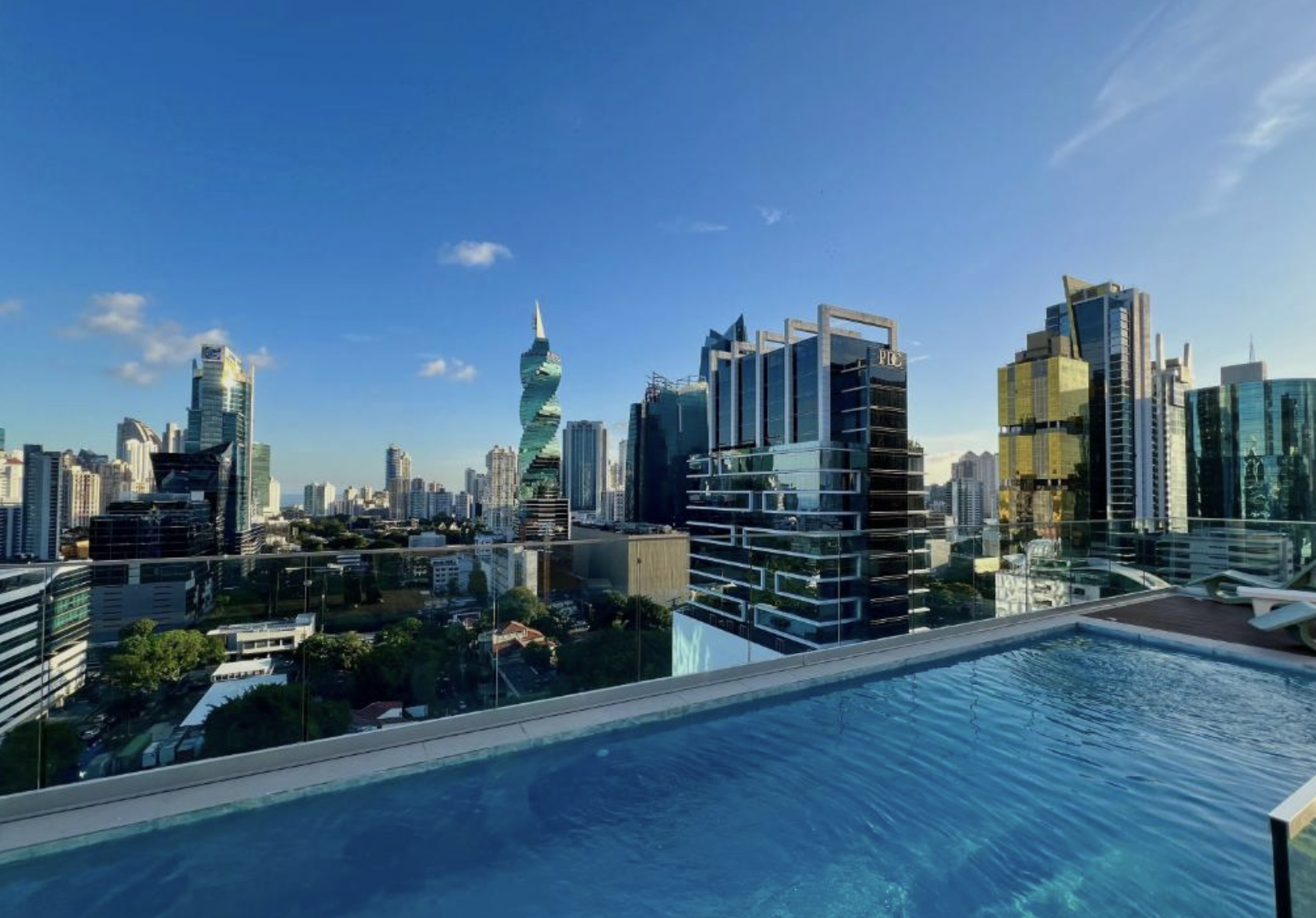
If the version of Panama City you imagined before arriving was a dense, pedestrian-friendly place with restaurants on every corner, cafés humming by nine in the morning, and a mix of residential and commercial that feels genuinely urban, Obarrio and its neighbor San Francisco are the closest match. They are where the city most feels like a city. For clients who come from a real urban context — New York, London, Miami — this is usually the neighborhood that feels most familiar.
What it is
Obarrio and San Francisco are two adjacent central districts that grew together organically over the last forty years. Obarrio is slightly older and originally residential, San Francisco slightly newer and denser, and the line between them is a fuzzy one. We treat them as a single neighborhood for the purposes of a brief because our clients who choose one or the other almost always consider both and the daily life is nearly identical. The street pattern is grid-ish rather than planned, the building mix is eclectic — mid-rise apartments next to single-family homes next to corner restaurants next to small offices — and the pace is conspicuously faster than Costa del Este or Clayton.
Who lives here
Residents are heavily Panamanian — more so than Costa del Este or Clayton — with a significant international minority concentrated in the newer residential towers. The age distribution skews younger: professionals in their thirties and forties, young families, childless couples, and a growing population of expats who specifically wanted urban density.
- Professionals in their thirties and forties who want to walk to dinner and take meetings at the café on the corner.
- Couples without school-age children who prioritize restaurants, nightlife, and urban energy over gardens and space.
- International residents from genuinely urban backgrounds (New York, London, Madrid, Buenos Aires) who find the tower-and-suburb alternative in other Panama City neighborhoods unsatisfying.
Obarrio and San Francisco appeal less strongly to retirees who want a quiet life, to families with young children who want walk-to-school routines, and to clients who want waterfront views.
Housing
The housing stock is mixed and varies in age, quality, and price more than in any other neighborhood on our list. Mid-rise and high-rise apartments built between the late 1990s and today form the bulk of the available rental inventory. Two-bedroom units in well-managed buildings rent in the range of US$1,400–$2,600 per month; three-bedroom units rent between US$2,200 and US$3,800. A meaningful discount to Costa del Este and Punta Pacífica at comparable finish levels, which is one of the quiet reasons Obarrio is popular among younger and budget-conscious professionals.
A practical caveat: the range of build quality in Obarrio is wider than in the newer planned districts. Some buildings are excellent; others have maintenance and management issues that are not obvious on a first walk-through. On an exploration visit we walk at least three buildings in different segments so clients can see the variation in person.
Daily life
Daily life is the selling point. Within a ten-minute walk of most Obarrio residential buildings you will find dozens of restaurants ranging from neighborhood Panamanian family places to modern Peruvian and international tasting menus, multiple independent cafés, bookshops, convenience stores, small gyms, pharmacies, bank branches, and full-service supermarkets. The restaurant scene here is the deepest in Panama City and includes several of the chefs and establishments that appear on Latin American restaurant lists.
The commercial density that makes Obarrio pleasant also makes it occasionally noisy, particularly on weekends along the busier restaurant strips. Traffic during rush hour on the major arteries (Calle 50, Vía Brasil, Vía España) is significant, though for residents who walk most of their daily errands this matters less than it sounds.
Healthcare access
Healthcare access from Obarrio and San Francisco is actually quite good. The Panama Clinic — one of the newer and increasingly well-regarded private hospitals — is located in San Francisco itself, within a short drive of most residential addresses. Hospital Punta Pacífica and Pacífica Salud are fifteen to twenty minutes away depending on traffic. Hospital Nacional, another long-established private hospital, is in the adjacent Bella Vista district and is widely used by residents of these central neighborhoods. For most clients, primary care, specialist visits, and emergency access from Obarrio or San Francisco are all well within the range our older clients consider acceptable.
What we'd also tell you over coffee
Obarrio and San Francisco are where Panama City is most itself. If that matters to you, nothing else will satisfy.
Clients who prioritize urban density almost always feel at home here within the first three or four days. Clients who prioritize peace and quiet almost always realize, by the end of their first week, that it is not for them. The test we suggest is simple: walk the neighborhood on a Wednesday evening and again on a Saturday morning. If both walks feel like good news, Obarrio is your place. If either one feels like too much, you will be happier in Costa del Este or Clayton.
A quieter note: because building quality varies so widely, the choice of specific building matters more in Obarrio than in the newer districts. A beautiful unit in a badly managed building is a slow-rolling problem. We place particular emphasis on HOA history, maintenance records, and building management in our shortlist for this neighborhood, and in our experience this is where the value of having someone with direct local knowledge on your side is most visible.
A realistic first week
For a typical Obarrio or San Francisco client: apartment handover and a first walk around the neighborhood on day one; first dinner out at one of the restaurants within three blocks on day one or two; coffee routine established at a local café by day three; Riba Smith or Super 99 run by day four; a check-in visit to The Panama Clinic or a preferred primary care physician within the first two weeks; first weekend walk through Casco Viejo, which is a ten-minute taxi ride away. The psychological sensation of "living here" tends to arrive faster in Obarrio than in the newer districts — partly because the neighborhood itself is more visible from your doorstep.
Is Obarrio right for you?
Obarrio and San Francisco are the right call if you want urban density, a serious restaurant scene, walkability, and a neighborhood that feels like a real city rather than a residential enclave. They are the wrong call if you want quiet, waterfront, a garden, or walk-to-school family life. For clients from genuinely urban backgrounds, these are almost always the neighborhoods that feel right.
Further reading
- The Panama Clinic — official site: panamaclinic.com
- Our related essay — Cost of living in Panama vs. the Caribbean