Punta Pacífica
A compact peninsula of waterfront towers on the south edge of Panama City — the neighborhood where the healthcare question stops being a question.
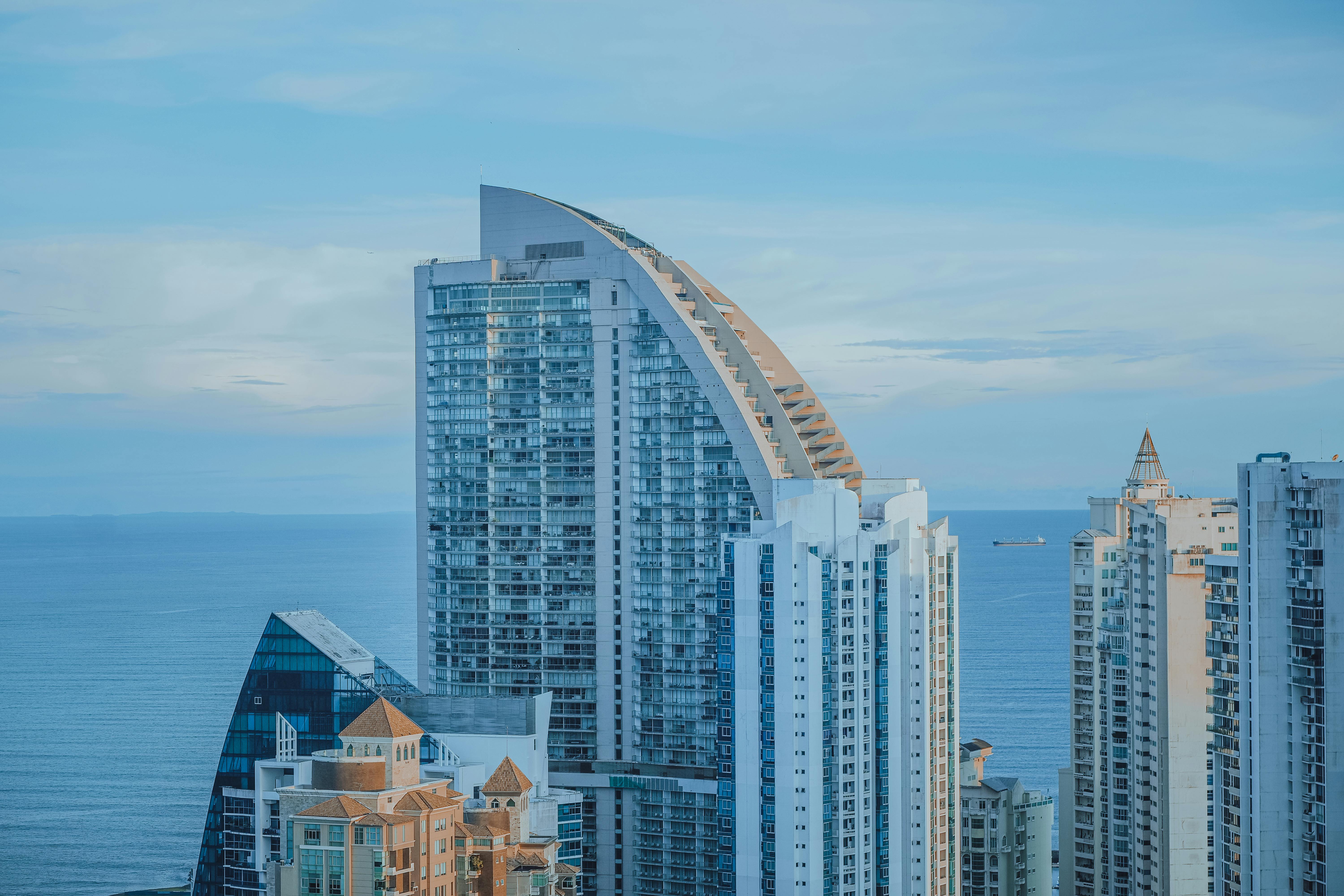
Punta Pacífica is the answer to a specific question. If healthcare proximity is the single most important factor in your move — and for clients in their late sixties and seventies, it usually is — this is the neighborhood that solves it. Hospital Punta Pacífica, the JCI-accredited hospital historically affiliated with Johns Hopkins Medicine International, sits at the head of the peninsula. Most of our retired clients who choose this neighborhood can walk to it in ten minutes.
What it is
Punta Pacífica is a small, dense, high-rise residential peninsula that was developed on reclaimed land beginning in the early 2000s. It is physically defined — you drive in through one of two entrances and the district simply ends at the waterfront on three sides. The urban form is vertical: most residents live in towers of twenty to sixty stories, many with direct water views. At the base of the peninsula is a commercial strip with cafés, restaurants, convenience retail, and a well-known shopping mall. At the tip is the hospital complex.
Who lives here
The residents skew older and more international than the city average. We place a significant share of our retired clients here, alongside diplomatic staff, senior professionals who want short commutes to the financial district, and Panamanian families who specifically want a newer building with a view. Children are relatively few compared with Costa del Este or Clayton, though they exist; there is no school within the district itself, which matters if that is a daily consideration.
- Retired couples who want JCI-accredited healthcare within walking distance and a low-maintenance apartment life.
- Empty-nesters and second-home owners who want a lock-up-and-leave base in Panama.
- Senior executives at multinationals with offices in the financial district, which is five to ten minutes away.
Punta Pacífica appeals less strongly to families with school-age children (Costa del Este and Clayton are easier for that life), and to clients who want a walkable, textured neighborhood with history (Obarrio or Casco Viejo serve that instinct better).
Housing
The residential stock is almost entirely modern high-rise apartments. Two-bedroom units of 120–150 square meters in good buildings rent in the range of US$1,800–$3,200 per month; three-bedroom units of 180–250 square meters rent between US$3,000 and US$5,500 depending on building, view, and floor. Penthouses and signature residences in the top buildings (notably the Trump Ocean Club era towers and several more recent developments) can run significantly higher. Purchase prices per square meter in Punta Pacífica are among the highest in Panama City, but still materially below comparable waterfront markets in Cayman, Nassau, or Miami.
What you are paying for: a full-service building with concierge, gym, pool, and parking; water views; walking-distance amenities; and — for the retired clients who choose this neighborhood specifically — the hospital. What you do not get: a yard, a ground-floor relationship with the street, or the sense of living in a neighborhood that existed before 2005.
Daily life
Daily life in Punta Pacífica is compressed by design. Within the district itself you have multiple cafés, a handful of mid- and upper-range restaurants, a shopping mall (Multiplaza is a five-minute drive, but the on-peninsula mall handles most everyday needs), pharmacies, and small supermarkets. Full-weekly grocery shopping usually happens at Riba Smith or Super 99 in Costa del Este or San Francisco, a fifteen-minute drive away. The waterfront promenade along the Cinta Costera is the neighborhood's outdoor living room — an unbroken running and walking path with views back toward the skyline and the old city.
The neighborhood is quiet on a weekday afternoon and busier on weekends when families from other parts of the city come to walk the malecón. Traffic within the district is manageable; traffic entering and leaving during rush hour, particularly on the southern access road, is the honest downside.
Healthcare access
This is where Punta Pacífica wins, unambiguously. Hospital Punta Pacífica — the JCI-accredited flagship hospital — is physically inside the neighborhood. For a resident of one of the newer towers at the end of the peninsula, it is a walk of five to twelve minutes, which means that for routine specialist appointments, diagnostics, and follow-ups, healthcare is closer than a supermarket. The hospital has emergency services, and the senior specialist roster is among the deepest in the country.
For clients whose primary decision driver is continuity of care for an ongoing condition — cardiac history, oncology follow-up, orthopedic surveillance — Punta Pacífica converts healthcare from something you plan your day around into something that happens in the gaps of your day. This is the single most common reason clients choose it.
What we'd also tell you over coffee
Punta Pacífica solves one thing better than anywhere in Panama. Whether that one thing is what you are solving for is the whole question.
Clients who come to Panama looking for "a city" sometimes find Punta Pacífica a bit too clean, too new, and too vertical — an apartment-building life rather than a neighborhood life. Clients who come looking for "a peaceful base with world-class healthcare and a water view" usually find it exactly right within the first week. The test we suggest: if you remove the hospital from the equation, does Punta Pacífica still excite you? If yes, it is the right call. If the honest answer is "no, but the hospital is what I actually need," it is still the right call — just for a more specific reason.
A practical note on buildings: Punta Pacífica's residential stock varies considerably in build quality and management. The best buildings are excellent; the worst have issues with maintenance, plumbing, and HOA governance that are not visible from a five-minute tour. On an exploration visit we walk through three or four buildings at different price points so clients can see the difference in person.
A realistic first week
For a typical Punta Pacífica client: move-in and key handover on day one; initial primary care consultation booked within the first three days (often the same or next day); supermarket run at Riba Smith in Costa del Este; morning walk along the Cinta Costera established as a daily habit by day four; first dinner at one of the peninsula's better restaurants; specialist consultation for any ongoing conditions scheduled within the first two weeks. For our retired clients specifically, the first month feels settled unusually quickly — a reflection of how few moving parts the neighborhood has.
Is Punta Pacífica right for you?
Punta Pacífica is the right call if you want a compact, low-friction, modern apartment life with JCI-accredited healthcare at the doorstep and a waterfront promenade outside your door. It is not the right call if you have school-age children, if you are looking for a textured neighborhood with history, or if you want a house with a yard. For the specific clients it fits, it fits better than anywhere else in Panama.
Further reading
- Joint Commission International — accredited organizations directory: jointcommissioninternational.org
- Hospital Punta Pacífica — official site: hospitalpuntapacifica.com
- Our related essay — Private healthcare in Panama: a guide for prospective residents